
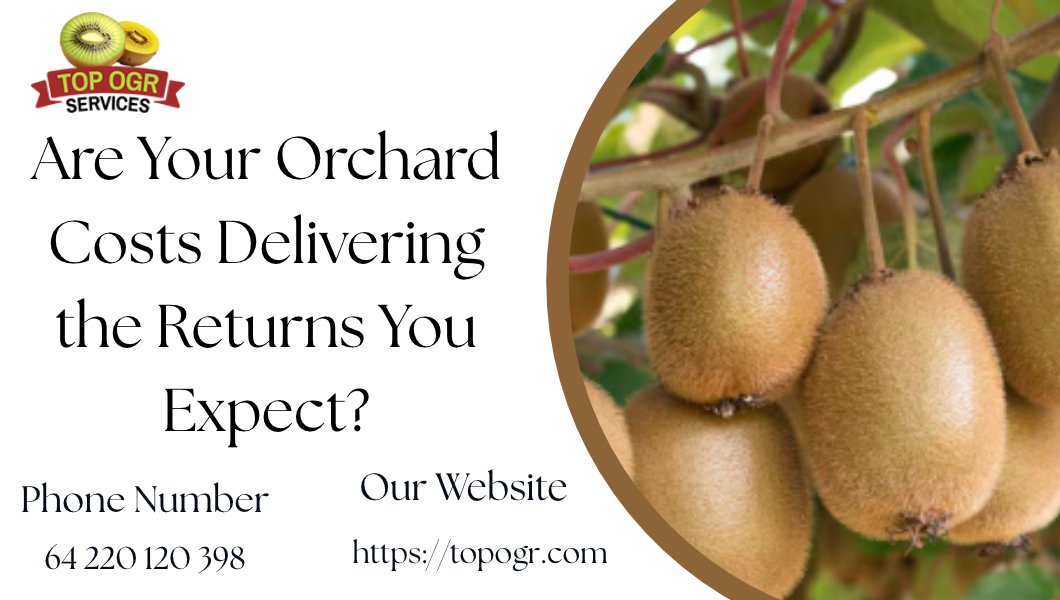
Are Your Orchard Costs Delivering the Returns You Expect?
- November 18, 2026
Every season, growers invest significant money into labour, fertiliser, canopy management and orchard maintenance.
But here’s a question worth asking.
Are we getting better returns, or simply spending more money?
An extra 2,000 trays per hectare sounds impressive. But what did it cost to produce them? What happened to fruit size, Class 1 packout and next season’s crop?
More production doesn’t always mean more profit.
Are We Fixing Problems or Funding Them?
Same weak areas. Same production gaps. Same extra work, year after year.
At what point do we stop treating the symptoms and start questioning the cause?
Sometimes the answer isn’t more labour or additional inputs. It’s understanding why the previous work hasn’t delivered the expected results.
Look Beyond the Numbers
Two blocks on the same orchard can receive similar inputs yet deliver very different results.
Is it soil structure, vine health, canopy utilisation, crop loading or decisions made months earlier?
The real opportunity lies in understanding why, rather than automatically repeating the same programme.
Better Decisions. Better Returns.
At Top OGR, we look beyond tray numbers.
Production, fruit quality, Orchard Gate Return (OGR), growing costs and long-term vine performance all matter.
Sometimes additional investment is the right decision. Sometimes a fresh perspective and better timing can deliver greater value.
The goal isn’t maximum trays or minimum costs. It’s the best sustainable commercial return.
So here’s one final question.
Is your orchard investment building future value, or simply funding another season of the same results?
Are Your Orchard Costs Supporting Better Returns?
Every season, growers invest heavily in labour, fertiliser, canopy management, irrigation and maintenance.
But the real question is simple.
Is that investment improving your Orchard Gate Return, or just increasing your costs?
More spend does not always mean better returns. An orchard can hold steady production while rising operating costs quietly reduce profitability.
Are Costs Rising Faster Than Returns?
Labour, fertiliser, irrigation, machinery and maintenance are all necessary. But every dollar should be measured against what it delivers.
Ask yourself:
* Are extra labour hours improving yield, packout or fruit quality?
* Are fertiliser and irrigation inputs supporting vine performance?
* Are recurring costs solving a problem, or managing the same symptom each season?
* Is increased spend showing up in stronger Orchard Gate Return?
The goal is not simply lower costs. It is knowing whether your spending is building commercial value.
Are All Blocks Earning Their savings?
Total orchard numbers can hide what is happening block by block.
Two blocks may receive similar inputs but deliver very different results. One may consistently achieve stronger packout and returns, while another consumes similar labour and resources without matching performance.
A block-level review can reveal:
* Yield and packout differences
* Fruit quality variation
* Blocks consuming more labour than they justify
* Uneven canopy performance
* Opportunities to redirect resources where they will deliver more
The opportunity is not always more input. Sometimes it is better allocation.
Are You Fixing Problems or Funding Them?
If the same weak blocks, quality issues or production gaps return every season, it is worth asking why.
Repeated work can increase costs without addressing the real constraint. Soil structure, drainage, root-zone conditions, vine health, canopy utilisation or past management decisions may be the actual issue.
Reviewing production history, costs and block performance together helps separate the cause from the symptom.
What an Independent Assessment Can Reveal
At Top OGR, we look beyond tray numbers.
An independent assessment can review:
1. Production, packout, fruit quality and Orchard Gate Return trends
2. Block-by-block performance
3. Labour allocation and recurring operating costs
4. Vine condition and productive canopy capacity
5. Management practices that may no longer be delivering value
The aim is simple: understand where performance is being limited and where better decisions can improve long-term commercial returns.
Understanding What Drives Orchard Returns
Sometimes extra investment is the right call. Sometimes a fresh perspective, better timing or sharper resource allocation delivers more value.
The goal is not maximum trays or minimum spend.
It is the best sustainable commercial return.
So ask yourself:
Is your orchard investment building future value, or simply funding another season of the same results?
Contact Top OGR to review your orchard’s costs, block performance and Orchard Gate Return opportunities.
Recent Posts
November 22, 2026
November 20, 2026
November 18, 2026

October 7, 2026

October 4, 2026
October 4, 2026