
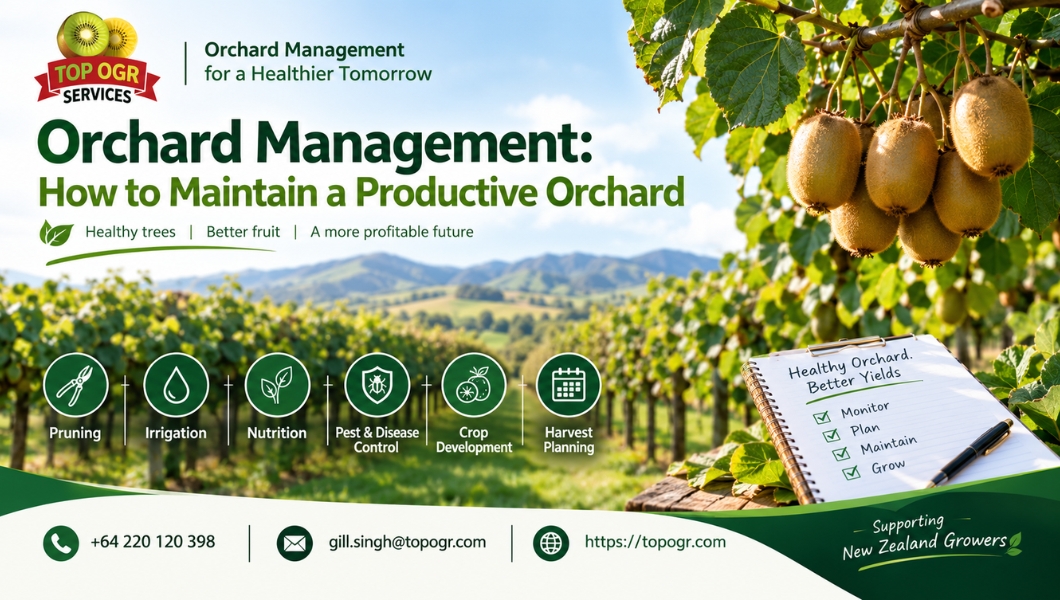
Orchard Management: How to Maintain a Productive Orchard
- September 29, 2026
An orchard needs attention throughout the year. There is always something to keep an eye on, whether it is new plant growth, the condition of the canopy, fruit development or the timing of harvest.
For a grower, good orchard management is really about staying on top of these things before they turn into bigger problems. The work changes with the season, so having a clear idea of what needs to happen and when can make a big difference.
This is especially true in New Zealand, where growers in areas such as the Bay of Plenty work around a busy seasonal cycle.
What Is an Orchard?
An orchard is a piece of land where fruit trees or fruit-producing plants are grown.
Apple and pear orchards are common examples, but an orchard can also be used for crops such as kiwifruit, citrus or mangoes. The plants are normally arranged so they can be looked after, monitored and harvested efficiently.
That is what makes a commercial orchard different from simply having a few fruit trees at home. There is much more planning involved.
The spacing of plants, access between rows, irrigation, pruning and future harvesting all need to be considered.
What Is the Difference Between an Orchid and an Orchard?
They may sound almost the same, but they are two completely different things.
An orchid is a flowering plant. An orchard is an area used to grow fruit trees or fruit-producing plants.
So, if you are talking about growing fruit, you mean an orchard.
It is a small distinction, but one that is easy to get wrong when searching or writing about the subject.
What Does Orchard Management Mean?
There is quite a lot behind the simple phrase orchard management.
It covers the regular decisions and practical work involved in keeping an orchard in good condition and producing a worthwhile crop.
Depending on the orchard, this may include pruning, thinning, irrigation, nutrition, canopy management, pest and disease monitoring and harvest planning.
The priorities are not the same all year.
For example, work that needs attention before the growing season may be very different from what needs to be done when fruit is developing. Good management means keeping up with those changes rather than following exactly the same routine every month.
How Do You Maintain an Orchard?
The best way to maintain an orchard is to keep a close eye on it.
Plants can tell you quite a lot if you take the time to look. Changes in growth, leaves, fruit development or the canopy may point to something that needs attention.
Pruning helps keep growth under control. Thinning can help manage the crop load. Irrigation and nutrition need to be monitored according to the crop and growing conditions.
It is also worth keeping records. A few notes about what was done during the season can be helpful when the same period comes around the following year.
There is no need to make orchard maintenance unnecessarily complicated. Consistent checks and timely work often go a long way.
Growers who need extra support can also use professional Orchard Management Services for planning and seasonal orchard work.
Why Is Canopy Management Important?
Walk through an orchard and you can usually tell when the canopy has become too crowded.
When there is too much growth in one area, light may not reach all parts of the plant as well as it should. Air movement can also become more difficult.
Managing the canopy helps keep plant growth in a more workable shape. It can also make pruning, crop checks and other orchard jobs easier for workers.
For kiwifruit growers, this is an important part of managing the crop. The goal is not simply to remove growth. It is about creating a plant structure that can be managed properly through the season.
What Is the Best Layout for an Orchard?
There is no single layout that suits every orchard.
The right setup depends on the crop, the property, soil, sunlight, irrigation and the equipment used for orchard work.
Access is another practical consideration. If workers or machinery cannot move easily through the orchard, even simple jobs can take longer than they should.
This is why orchard layout is worth thinking about before planting. A little planning at the beginning can save plenty of hassle later.
What Fertiliser Is Best for Fruit Trees?
There is not one fertiliser that is automatically right for every fruit tree.
The needs of a young plant can be different from those of an established, productive plant. Soil condition and crop type matter too.
Rather than guessing, growers can use soil and plant testing to get a better idea of what nutrients are available and what may be needed.
More fertiliser does not always mean better growth. The aim is to give the plants what they actually require without wasting inputs.
What Is the Lifespan of an Orchard?
An orchard can stay productive for many years, but there is no standard lifespan that applies to every property.
Plant health, soil conditions, crop type, growing conditions and management all play a part.
Sometimes the whole orchard does not need replacing. Individual plants or certain areas may decline while the rest continues to perform well.
Keeping records and watching production over time can help growers recognise these changes and plan ahead instead of making decisions at the last minute.
Who Manages an Orchard?
A person who manages an orchard is generally known as an orchardist.
An orchardist may be involved in much more than plant care. Depending on the size of the operation, they may help plan seasonal work, organise labour, monitor the crop and prepare for harvest.
On a larger orchard, different people may take responsibility for different jobs. An orchard manager, supervisor and seasonal workers can all have a part to play.
The important thing is that the work is coordinated.
How Much Does Orchard Management Cost?
The cost of managing an orchard can vary quite a bit.
The size of the property is one factor, but it is certainly not the only one. Crop type, labour, machinery, seasonal work and the condition of the orchard can all affect the total cost.
Kiwifruit growers, for example, have a range of costs to consider throughout the year. Looking at Kiwifruit Orchard Management Costs can help growers understand where management expenses may come from and plan their budgets more carefully.
What About Green and Gold Kiwifruit?
Kiwifruit is a major part of New Zealand horticulture, and growers need to understand the particular crop they are working with.
Green Kiwifruit and gold varieties have their own production considerations. Plant growth, canopy work, crop development and harvest preparation all need to be taken into account.
The Gold Kiwifruit Plant is one example where understanding how the plant develops can help with planning.
Harvest is another stage that deserves preparation. Once fruit is ready, there is a lot to organise in a relatively short period. Planning for the Kiwifruit Harvest ahead of time can make the work much more manageable.
5 FAQs
What is a person who runs an orchard called?
A person who runs or manages an orchard is commonly called an orchardist.
What do you call someone who takes care of an orchard?
They may be called an orchardist, orchard manager or orchard worker, depending on the work they are responsible for.
What are the typical responsibilities of an orchard worker?
An orchard worker may carry out tasks such as pruning, thinning, crop monitoring, general plant care, maintenance and harvesting.
Is mango an orchard fruit?
Yes. Mangoes can be grown in orchards where the trees are planted and managed for commercial fruit production.
What are the main parts of orchard management?
Common areas include pruning, canopy management, thinning, irrigation, nutrition, crop monitoring, pest and disease management, labour planning and harvesting.
Final Thoughts
There is no single task that makes an orchard successful. It is the combination of many smaller jobs being done at the right time.
A grower needs to notice what is happening in the plants, keep track of seasonal work and be prepared to change the plan when conditions change.
That is really what orchard management comes down to.
For growers in New Zealand, including the Bay of Plenty, a practical and well-organised approach can make everyday orchard work easier while supporting healthy plants and consistent production.
Recent Posts

October 7, 2026

October 4, 2026
October 4, 2026
September 30, 2026
September 29, 2026
September 25, 2026